Logo redesign
Logo Redesign: When and How to Modernize Your Visual Identity Without Losing Customers
 MajoliÉquipe de Majoli.io
A dated logo can cost you: companies with a consistent visual identity generate up to 23% more revenue (Lucidpress). Warning signs, a 5-step method, budgets, and the legal trap to know before any redesign.
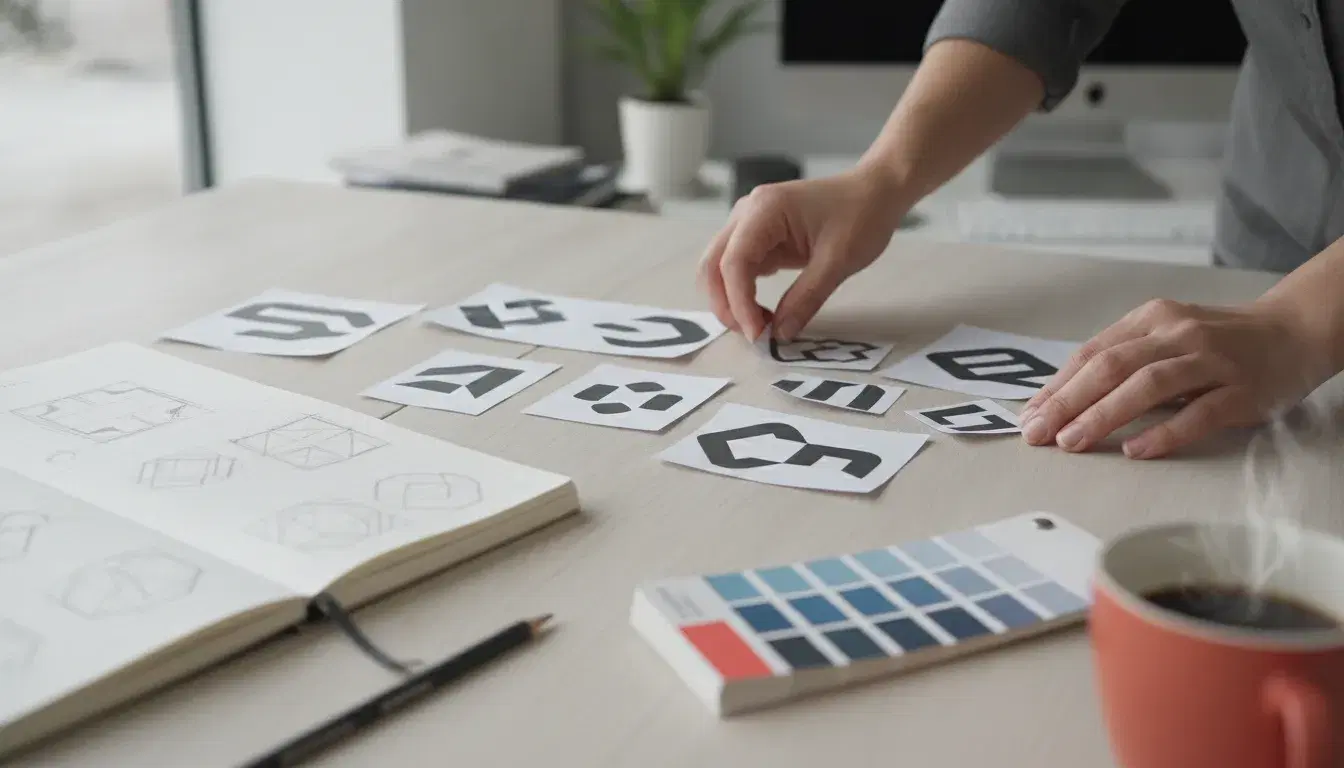
A logo does not wear out like a machine, but it does go out of style. Gradient effects, glossy 3D icons, overloaded symbols: what looked modern eight or ten years ago can now read as outdated, even when the business itself has moved on. According to a Lucidpress study on brand consistency, companies with a consistent visual identity generate up to 23% more revenue than those with an inconsistent or dated image. And according to Sprout Social (2024), 72% of consumers say that consistent brand communication directly strengthens their trust in a company.
Redesigning a logo is therefore not a minor aesthetic choice. It is a decision that affects credibility, conversion, and, if handled poorly, the very recognition a brand has built with its existing customers. We already touched on this risk in our article on a dated logo holding back growth: this guide goes further, with the full method for running a redesign without losing customer trust, the budgets observed on the market, and the main legal trap to avoid.
Full redesign or gradual evolution: two possible paths
Before asking "what should my new logo look like," a more strategic question needs an answer first: should you start from scratch or evolve what already exists? Both options are legitimate, but they respond to different situations.
The refresh (gradual evolution)
This means simplifying the symbol, modernizing the typography, or adjusting the colors while keeping the recognizable elements: silhouette, initial, dominant palette. This is the recommended approach when the brand is already established and the goal is to modernize without losing the recognition built up with customers over time. Most large brands proceed this way, through successive small adjustments, precisely to never break visual recognition.
The full redesign (rebranding)
This is justified when the problem goes beyond graphics: a change of positioning, a merger, diversification into a new market, or a name that has become a commercial obstacle. In this case, the logo is only one piece of a larger project that includes brand strategy, possible renaming, and a complete visual identity guide.
Before going further, it is worth checking where your current identity stands: our brand kit checklist helps you list precisely what already exists, what is missing, and what deserves rework before launching a redesign project.
The signs that it is time to act
A logo does not need to be "ugly" to justify a redesign. The signals to watch for are mostly functional and commercial.
- It loses legibility on mobile. Shrunk to the size of a favicon or a social media avatar, an overly detailed logo becomes illegible. The simplest test: look at your logo on a smartphone screen, at the actual size it is used.
- It no longer reflects the company's actual activity. A craftsperson who has grown into a regional SME, an offering that has diversified: the visual identity should follow these changes rather than stay frozen at the company's original positioning.
- It looks too close to a competitor's. With the rise of automated logo generators, the risk of visual similarity has increased, creating real confusion for customers.
- It is hard to apply across every touchpoint. Website, social media, email signature, quotes, vehicles: if the logo only works well in a single format, that is a design flaw worth fixing.
- The image no longer matches the company's actual level of professionalism. This is often the most commercially costly gap: a premium offering undermined by an amateur-looking image.
The wrong reasons to change a logo
Conversely, certain triggers regularly lead to failed redesigns or unnecessary changes:
- Founder fatigue. Seeing your own logo every day for ten years can create a false sense of it being worn out, even though customers do not perceive it that way at all.
- Chasing trends. Following every graphic fad leads to redoing the identity every two years, which destroys the recognition built over time.
- Copying a competitor who just relaunched their visual identity, without this responding to a genuine need of your own company.
- A rushed change ahead of a trade show or a launch, without enough time for a proper strategic brief.
In both directions, what failed redesigns almost always have in common is not the quality of the final artwork: it is the absence of strategic thinking upfront, and a lack of internal buy-in before the external launch.
The 5-step method to redesign a logo without losing customers
1. Audit what already exists before drawing anything
List what works (a recognized color, a memorized shape, an identifiable typeface) and what is genuinely a problem. This foundation determines whether you need a refresh or a full redesign.
2. Write the strategic brief before the creative brief
Positioning, target audience, values, differentiation from competitors: these answers must come before any creative work. However talented a designer is, they cannot make up for missing strategy upstream.
3. Favor a gradual transition over an abrupt change
Keeping at least one recognizable element (a dominant color, a shape, an initial) limits the immediate loss of recognition. This matters especially for businesses that rely heavily on word of mouth or repeat customers.
4. Get internal buy-in before external communication
A new identity that is poorly understood internally is rarely well carried externally. Present the new logo to your teams and explain the reasoning before any public announcement.
5. Roll it out across every touchpoint on the same day
Website, social media, email signature, quotes and invoices, storefront signage: a rollout spread over several weeks creates a confusing period where the old and new logo coexist inconsistently. Prepare every file before launch so you can switch over in one move.
On the color and typography side of the new brand guide, two related guides detail the method: choosing the colors of your brand guide and choosing the typography of your brand guide.
How much does a logo redesign cost in France
Budgets vary widely depending on the scope of the project. For a custom logo aimed at a small business or a craftsperson, including research and adaptations for digital and print, market rates for design work in France most commonly range between 800 and 2,500 euros. For a full rebrand including brand strategy, visual identity, and a detailed brand guide, the budget typically climbs to between 15,000 and 50,000 euros, excluding rollout costs (printing, website redesign, signage), which can double or triple the initial spend depending on company size.
These gaps explain why the first step, the strategic audit, matters so much: it tells you whether the company needs a simple refresh, which is far less costly, or a full rebranding project.
The legal trap not to overlook: unintentional infringement
One of the least anticipated risks during a redesign is an unintentional resemblance to an already registered logo or trademark. Before finalizing a new logo, a prior-rights search with the INPI (France's national institute of industrial property) is recommended, just as it would be for a brand name. A logo too close to an already protected sign can trigger a formal notice or even costly litigation, forcing the company to start over under time pressure, on top of losing the communication effort already invested.
Frequently asked questions
How often should you redesign your logo?
There is no universal rule, but practitioners in the field generally recommend a check-in every 5 years for a small business and every 8 to 10 years for a more established company, with the real trigger being an observed gap with the company's actual activity rather than a fixed calendar date.
Can you change your logo without losing your website's search rankings?
Yes, as long as you properly update image alt tags, the favicon, Organization structured data, and the logo files used in Google Search Console, without touching existing URLs or text content, which remain the determining factors for search rankings.
How do you announce a logo change to customers without confusing them?
The most effective approach is to briefly explain the reason for the change (business evolution, modernization) rather than simply publishing the new logo without context. A short message on social media and in a newsletter, combined with a coordinated rollout across every touchpoint on the same day, limits confusion.
Is a light refresh enough, or do you always need an agency?
A light refresh (colors, typography, simplifying the symbol) can sometimes be handled in-house if the company already has a solid graphic foundation. As soon as the project touches positioning, naming, or a complete brand guide, support from graphic design professionals avoids the consistency mistakes that are the most costly to fix afterward.
What if the new logo looks like a competitor's?
It needs to be changed before any public launch, even if that delays the project. A search with the INPI along with a broad visual search (not limited to your own industry) helps avoid having to change it again under pressure a few months after launch.
A visual identity that has aged poorly cannot be fixed with a simple coat of graphic paint. It requires a method: audit, frame the strategy, evolve rather than break when possible, bring the team on board, then roll out in a single move. This work, more than graphic talent alone, determines whether a logo redesign strengthens a company or costs it part of what it took years to build. Our design studio supports small and medium businesses through this entire journey, from auditing the existing identity to fully rolling out the new brand guide. To discuss your project, reach out through our contact page.
Read next
October 7, 2026
AI and Accounting for Small Businesses: Automating Data Entry and Bank Reconciliation in 2026
46% of accountants use AI daily, up from 18% in 2023 (Sage). The 5-step method to automate invoice entry, bank reconciliation and pre-categorization in 2026.
October 6, 2026
Business Registration for Liberal Professions: The Rules to Know in 2026
1.7 million liberal businesses in France, according to UNAPL. Lawyers, doctors, consultants: registration rules vary by profession. The complete guide to choosing the right solution in 2026.
October 5, 2026
Company Style Guide: The Essential Elements for a Document Your Providers Will Actually Use in 2026
95% of companies have brand guidelines, but only 25% actually apply them (Digital Silk). The 8 essential elements for a style guide document your providers will actually use in 2026.