Get Cited by ChatGPT and Google: The GEO Guide for Small Businesses in 2026
 Sofia BoutraResponsable commerciale de Majoli.io
35% of searches already go through generative AI. How to get cited by ChatGPT and Google AI Overviews: sourced data and a 4-week action plan for small businesses with no marketing team.
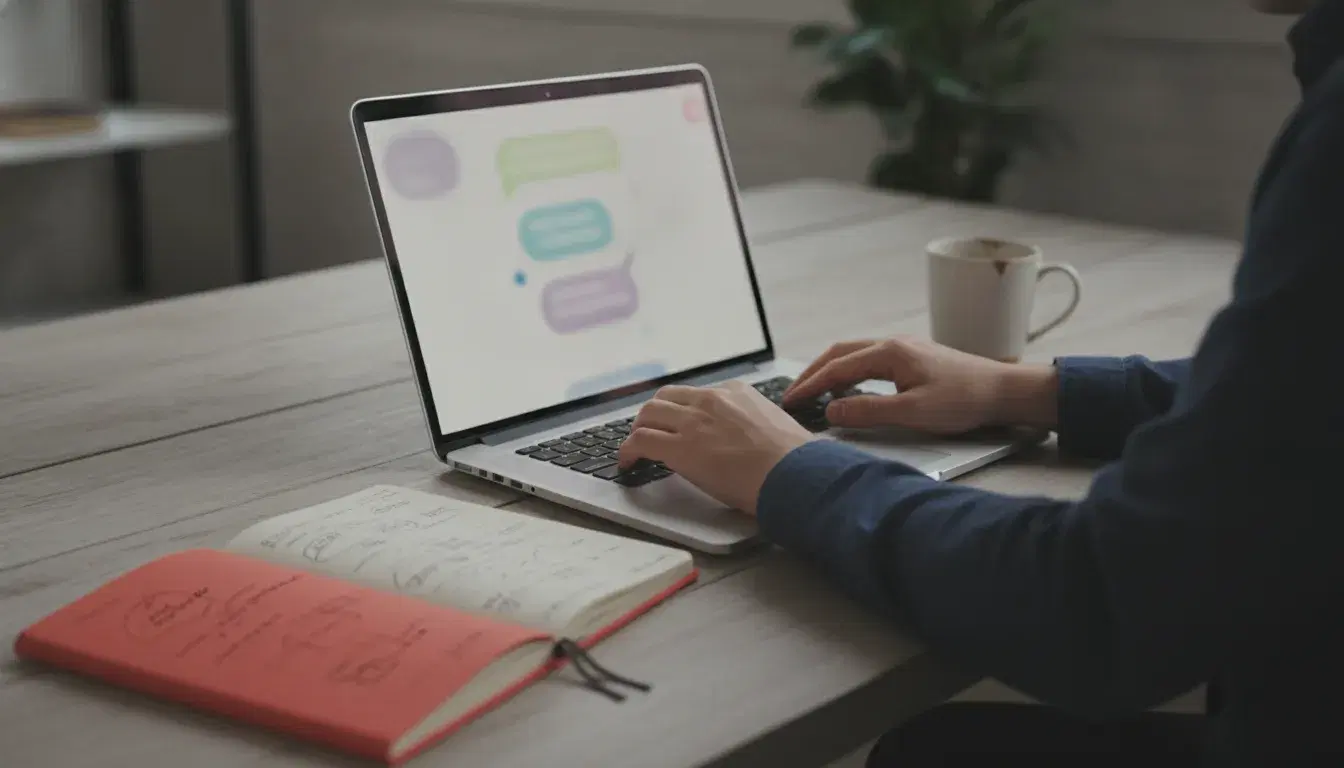
On July 22, 2026, Google switched on AI Overviews in France, two years after their US launch. That day, search changed nature for millions of French businesses: a growing share of potential customers no longer click a link, they read a machine-generated answer instead. According to Similarweb, 35% of internet searches already went through a generative AI engine as of March 2026 (ChatGPT, Perplexity, Google AI Overviews and Claude.ai combined). For a small or medium business, the question is no longer whether this shift will matter, but how far behind it already is.
This guide explains what generative engine optimization (GEO) is, why it does not replace SEO but adds to it, and above all how to put it into practice when you have neither a marketing team nor an unlimited budget.
What GEO is, and why it matters for small businesses too
GEO covers the practices that make content easy for generative AIs, ChatGPT, Perplexity, Copilot, Gemini and Google's AI Overviews, to pick up, cite or paraphrase. Unlike traditional search engine optimization, the goal is no longer to rank first on a results page, but to be the source the AI chooses to cite in its answer.
Many small business owners assume this topic only concerns big brands or media outlets. That assumption is costly. Generative AIs answer precise, local questions first, exactly the ones your customers ask before buying: "who is the best [trade] in [city]", "how to choose a [service]", "how much does [service] cost". On these queries, a well-structured small business statistically stands a better chance of being cited than a large generalist brand, because the AI favors precise, complete answers. The principle mirrors local search optimization: precision beats reputation.
The numbers changing the game in 2026
- 35% of internet searches now go through a generative AI engine, according to Similarweb (March 2026).
- When an AI Overview appears on Google, the top organic result loses 58% of its clicks, according to an Ahrefs study from December 2025.
- The Pew Research Center, studying 68,000 real queries, measured an 8% click rate when an AI summary is shown, versus 15% without one.
- Conversely, being cited in an AI answer has a measurable upside: according to a Search Engine Land analysis of 94 e-commerce sites, traffic from ChatGPT converts 31% better than non-branded organic traffic.
- Brand mentions, being cited, even without a link, on other sites, directories or articles, are three times more predictive of an AI citation than classic backlinks, according to an Ahrefs study of 75,000 brands.
- Good news for well-positioned sites: the click-through rate on AI Overviews themselves has been climbing back up, from 1.3% in December 2025 to 2.4% in February 2026, according to Seer Interactive, an 85% jump in two months.
These figures tell the same story from two angles. The volume of "free" clicks from an average Google position is shrinking. But the value of a citation is rising: less traffic, but traffic that converts better, because it reaches a customer already convinced by the AI's answer.
SEO and GEO: addition, not a war
Traditional SEO is not dead. AI engines still rely heavily on Google's index to build their answers: a poorly indexed, slow or badly structured site has little chance of being cited by an AI, for the same reason it struggles to appear in classic results. Solid technical and content foundations remain the base. GEO adds a layer on top: a way of writing and structuring that content so a machine can easily extract it.
In practice, three differences matter for a small business:
- The goal changes: aim for citation inside an answer, not just a page-one ranking.
- The authority signal changes: consistent brand mentions across several sites (professional directories, local press, partners, social networks) weigh as much as, if not more than, inbound links.
- The format changes: AI extracts self-contained passages of 40 to 60 words, not entire pages. Content that answers immediately, before elaborating, gets cited more often than content that builds its case over three paragraphs before reaching the point.
The 4-week GEO action plan for a business with no marketing team
Most guides on this topic stop at theory. Here is a method you can apply yourself, with no prior technical skill.
Week 1: the visibility audit
List 10 to 15 questions your customers actually ask before contacting you (type of service, comparisons, pricing, location, timelines). Type them word for word into ChatGPT, Perplexity and Google's "AI" tab. For each one, note: is your business cited? Is a competitor? Which source does the AI use? This simple table becomes your roadmap for the following three weeks.
Week 2: restructure 3 to 5 key pages
Pick your most strategic service pages and articles. For each one: add a direct 40-to-60-word answer right after the title, turn your subheadings into concrete questions, keep paragraphs to three or four sentences, and add a summary at the top. This rewrite does not change the substance of your message, it changes how easily a machine can break it down and cite it.
Week 3: build your entity's authority
Check that your business name, description and activity are written exactly the same way on your website, your Google Business Profile, LinkedIn and the professional directories you appear in. Add a detailed "About" page with company information and, where possible, the profiles of the people running it. This consistency in naming and description is what lets an AI connect several sources together and recognize you as a trustworthy entity.
Week 4: markup and open the door to AI crawlers
Add FAQPage schema markup to your frequently-asked-questions pages and Organization schema to your homepage. Then check that your robots.txt file does not block AI crawlers (GPTBot, PerplexityBot, Google-Extended, ClaudeBot): a block, sometimes enabled by default by certain hosts, makes you simply invisible to these engines. This technical check takes a few minutes and can be a blocker all on its own.
From there, the work becomes ongoing: republish your strategic pages whenever a figure or a piece of information changes, and repeat the week-1 manual test every quarter to measure progress.
How to check whether you are already cited, without a paid tool
The manual test described in week 1 remains the most reliable, free method: ask ChatGPT, Perplexity and Google yourself the questions your customers would ask. Search Console gives a useful indirect signal: a rise in impressions without a rise in clicks on a given query often reflects growing exposure in rich results or AI Overviews. To go further, specialized tools such as Peec AI, Otterly.ai or Ahrefs Brand Radar automatically track your citations across several AIs at once; they become genuinely useful once manual tracking gets too time-consuming.
The mistakes that cost the most
- Unknowingly blocking AI crawlers, often through a technical setting inherited by default.
- Writing to impress rather than to answer: a long introduction before getting to the point gets ignored by automatic extraction.
- Neglecting the consistency of your business name across your site, social networks and directories, which confuses how the AI recognizes your entity.
- Citing no dated source: content with no figures or recent dates gets picked up less often than content that documents its claims precisely.
- Dropping traditional SEO in favor of GEO alone: the two feed each other, neither works durably without the other.
For businesses that lack the time or internal resources to lead this work, digital marketing strategy support helps prioritize actions by industry and avoid the most common technical mistakes. That structuring work often also involves overhauling the website itself, when it is not technically ready to be read by an AI. If you are torn between investing in content or in advertising, our comparison of SEO and Google Ads will help you decide. You can also get in touch for an AI visibility diagnosis.
GEO also fits into a broader trend: artificial intelligence serving small businesses, which we cover in our guide to generative AI for small businesses and our article on autonomous AI agents.
Frequently asked questions
Will GEO replace SEO?
No. AI engines still rely heavily on the index and signals of traditional search engine optimization to build their answers. A poorly optimized site has little chance of being cited by an AI. GEO adds complementary writing and structuring practices; it does not replace the underlying SEO work.
Do I need a large budget to start with GEO?
No. The core of the 4-week plan described above, manual audit, editorial restructuring, consistent business information, requires no paid tool. Automated tracking solutions (Peec AI, Otterly.ai, Ahrefs Brand Radar) become useful only once the volume of content to monitor exceeds what a manual test can handle.
How do I know if my site is already cited by ChatGPT or Google?
The simplest method is to ask ChatGPT, Perplexity and Google's AI tab yourself the questions your customers would ask before contacting you. Note whether your business appears, and which page or source the AI uses. This free test, repeated every quarter, is enough for a small business.
Will Google's AI Overviews reduce my traffic?
Likely, on queries where an AI Overview appears: studies (Ahrefs, Pew Research Center) show a significant drop in clicks on the top organic result in that case. In exchange, being cited in the answer itself generates more qualified traffic: according to Search Engine Land, traffic from ChatGPT converts 31% better than non-branded organic traffic on the e-commerce sites studied.
Where should I start if my business has no marketing team?
Start with the week-1 audit: list your customers' questions and test them yourself in the main AIs. This free diagnosis, doable in an hour, immediately reveals whether the topic is urgent for your industry and which pages to focus the following weeks' effort on.
Besoin d'un accompagnement ?
Découvrir les services Majoli
Création de site web, SEO et automatisations IA : explore nos offres pour accélérer ta croissance.
Découvrir les services MajoliDécouvrir les derniers articles

September 16, 2026
How Much Does a Logo and Brand Identity Redesign Cost in 2026?
A logo redesign can cost 200 euros or 30,000 euros depending on the provider. The complete guide to 2026 pricing, hidden costs, redesign steps and mistakes to avoid when rebranding.
September 15, 2026
Automating Quotes in Small Businesses: The 5-Step Method to Save Time and Sign Faster in 2026
68% of clients request 3 to 5 quotes before deciding (CAPEB), and 41% forget to respond without a follow-up. The complete method for automating quote creation, sending, signing and follow-up.
September 14, 2026
RGAA Digital Accessibility: The 2026 Guide to Website Compliance
Since June 28, 2025, the European Accessibility Act extends the RGAA to private businesses, with fines of up to 50,000 euros per service. The 5-step method to reach compliance in 2026.